
Greywacke Zone
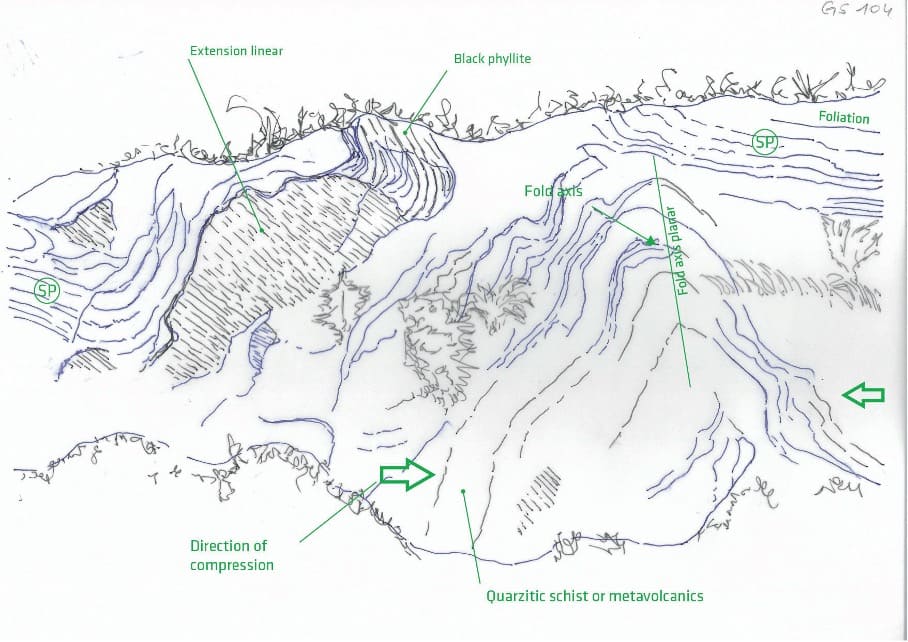
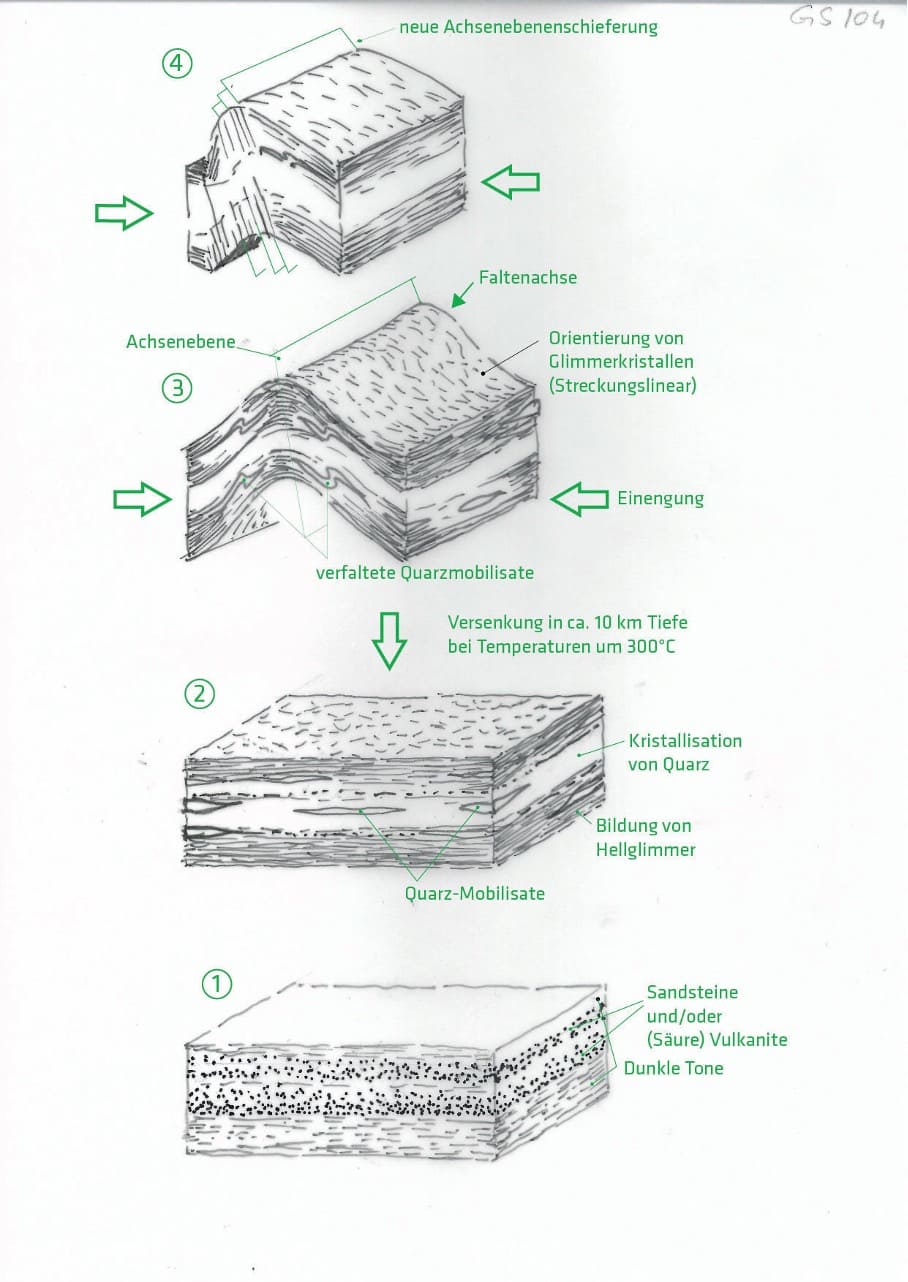
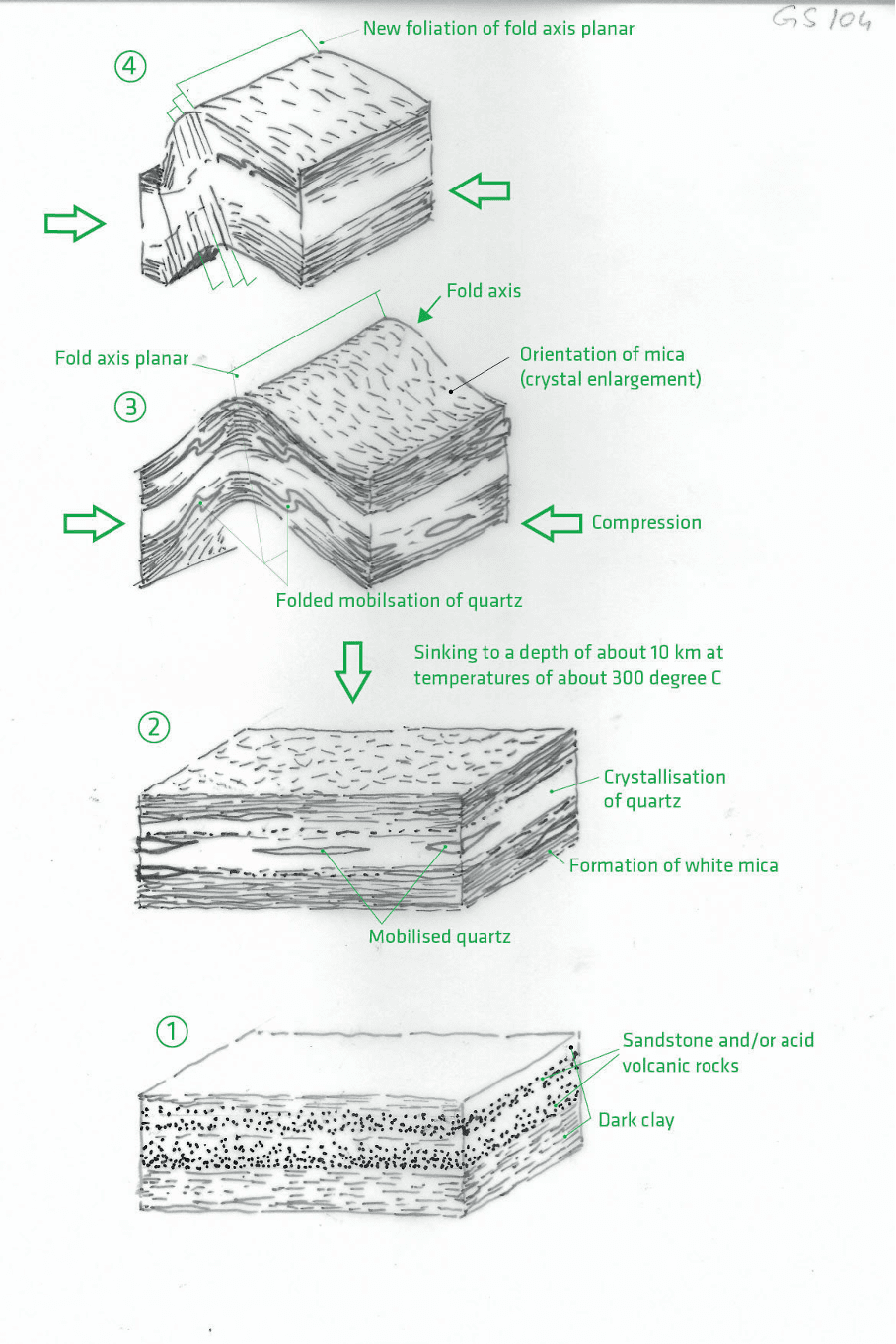
The Schwarzphyllites originated from dark,
clayey deposits in the deep sea. The dark,
sometimes reddish color is due to oftenpresent
organic components and iron
compounds. However, none of the original
clay minerals remain because the current
mineral composition has formed through
metamorphism (rock transformation)
during a mountain-building process under
extreme conditions (temperature ≈ 350°C
- 550°C, pressure ≈ 200 - 1000 MPa).
Characteristic minerals now include mica,
quartz, sometimes feldspar, chlorite, and
iron oxide. The light layers were originally
either sandy deposits or volcanic tuffs.
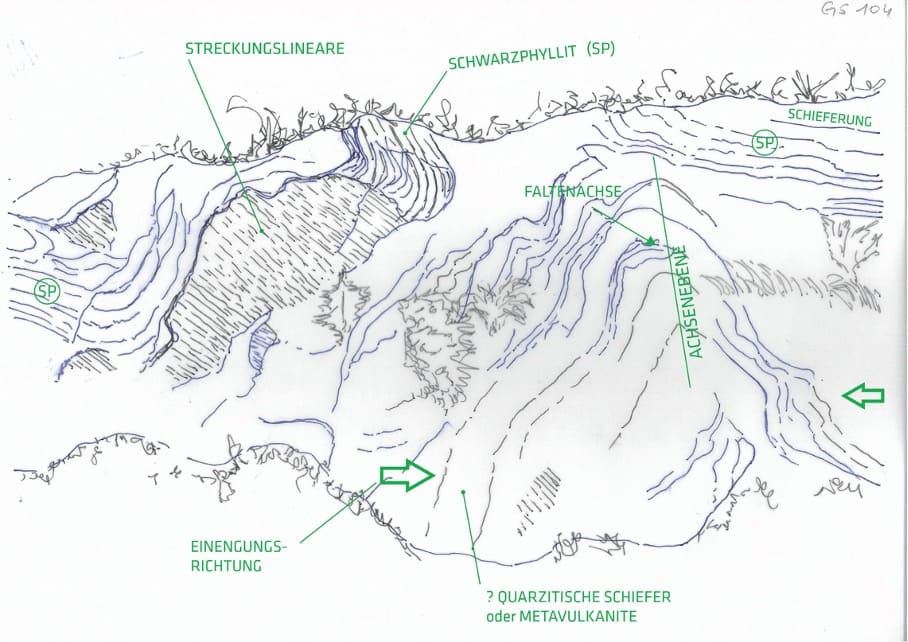
The rocks are intensely schistose, often
even multiple times, and folded. Despite
the schistosity and metamorphism,
the sedimentary structures are still
recognizable.
Kids
The legend of the iron hen
The boisterous miners from the Iglsbach mines, located at the eastern foot of the Hochgründeck mountain, went to see the beautiful daughter of the old Zechbauer woman, who was a sorceress. She did not want to let her daughter go to the miners, and constantly rejected them with harsh words, even curses. But the miners were not deterred and continued to visit the beautiful Katharina. The old farmer's wife then decided to cast a spell on the entire mining community.
So she decided to have an iron hen made with iron eggs and coated everything with boiling pitch and sulphur to prevent rust. She then used magic spells to bury the hen and its eggs in an unknown place. From that moment on, the rich ores at Iglsbach disappeared, and the miners' glory days were over.
The miners then left the valley. Today, hardly anyone can find old slag heaps and mining equipment along the Iglsbach. Many years have passed since the old miner's wife died and the beautiful Katharina closed her eyes forever. However, the spell still lies over the rich veins of ore at the foot of the Hochgründeck, and no one is able to find them. The spell will not be lifted until either a Sunday child lifts the iron hen from the earth's bosom, or the "magic work" decays and rusts away.

 English
  German